


Google Search Console gives agents the ground truth they need to drive a technical SEO audit end to end, provided the ingestion layer respects its quotas. Push past 2,000 URL Inspection calls per day on a property and the loop stalls until midnight.
The pipeline here pulls four GSC surfaces into a vector-backed store, routes audit tasks across specialized agents, and commits patched robots.txt, sitemap, schema, and meta changes through GitHub pull requests. It assumes a BYOK provider setup and a scraper layer for pages GSC does not surface. The anomaly-detection pass runs upstream of this one and feeds its alerts in.
GSC Splits Into Four Ingestible Surfaces
The Search Console API splits into endpoints that behave very differently under load. Search Analytics returns aggregated query, page, country, and device data, up to 50,000 rows per request. URL Inspection mirrors what the Search Console UI shows for a single URL: canonical, index coverage, structured data parse results, and the last crawl date. Sitemaps lists submitted sitemaps and their processing state. The Bulk Data Export, available since 2023, drops the full Search Analytics corpus into BigQuery daily with no row cap. It is the only way to get the full long tail, since the API truncates aggregation beyond the first 50,000 rows.
Treat these four as separate ingestion jobs, not one. The Search Analytics per-minute ceiling is generous enough for scheduled pulls across large properties. URL Inspection is the choke point, and its cap cannot be bypassed with additional API keys, so inspection calls get reserved for URLs flagged by Search Analytics drops or coverage changes. Bulk Data Export in BigQuery is the layer agents actually query for history. Joins against a vector-indexed sitemap table happen there, not in the live API.
Embeddings get generated from the page content, title, meta description, and any rendered JSON-LD. The embedding model used is independent of the audit model. Most setups on Search.co use one provider for grounding and another for reasoning, selected per task.
Routing Audits Across Specialized Agents
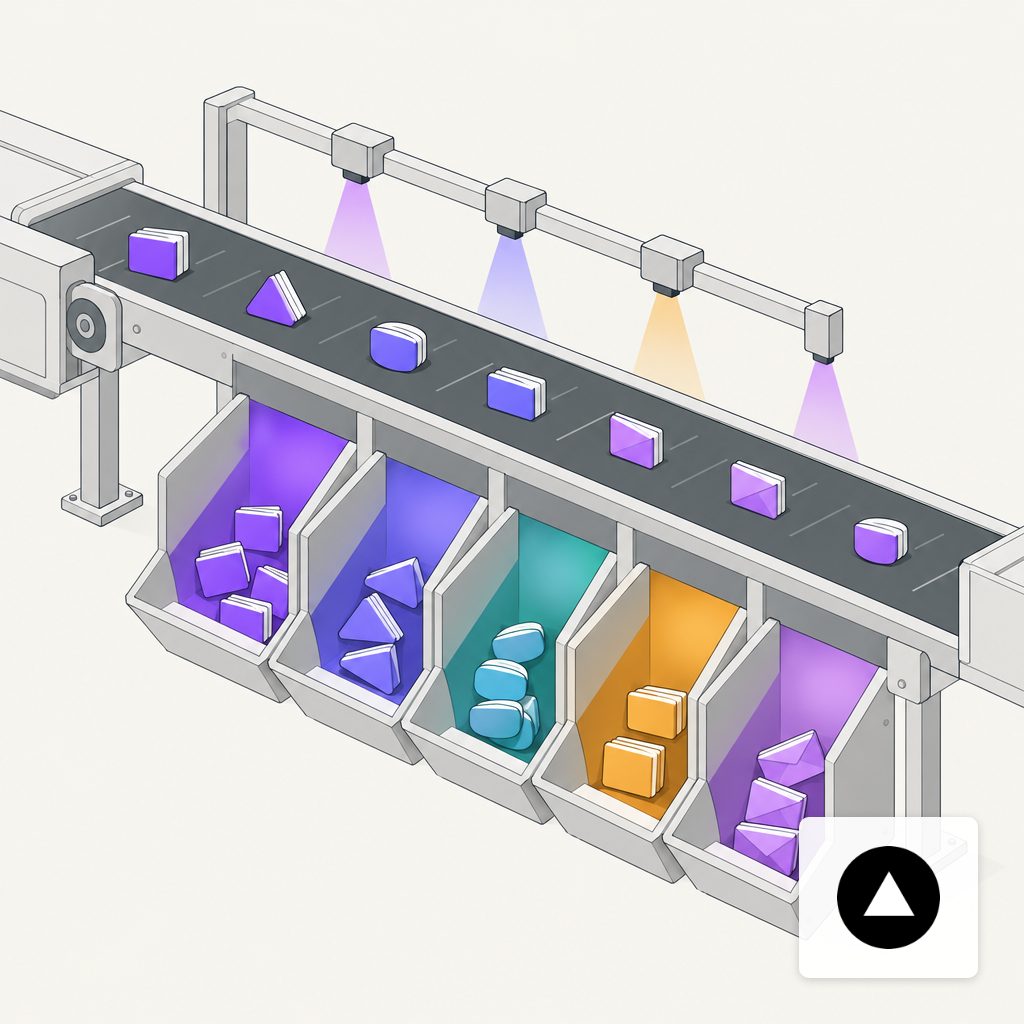
A single model handling every GSC question wastes tokens on cheap work and cuts corners on expensive work. Technical SEO breaks naturally into agent specialties, each with its own prompt, tool access, and model routing.
- A coverage agent reads URL Inspection and sitemap data, flags "Discovered - currently not indexed" clusters, and proposes sitemap changes.
- A schema agent parses JSON-LD against Schema.org and Google rich-result requirements, and drafts markup patches.
- A meta agent rewrites titles and descriptions where Search Analytics shows high impressions against low CTR.
- A redirect agent walks 3XX chains discovered in URL Inspection and proposes consolidated rules.
- A core web vitals agent correlates CrUX data against GSC performance groups to prioritize LCP work.
Each agent gets a scoped view of the vector store. The schema agent only sees pages where recent JSON-LD hashes have changed. The meta agent only sees pages where the Search Analytics CTR z-score has moved more than one standard deviation against the trailing 28-day baseline. The coverage agent sees coverage-state changes. Scoping keeps context windows small and token bills predictable.
Routing lives one layer above the agents. Tasks with heavy structured output (schema generation, sitemap diffs) go to a stronger reasoning model. Classification tasks (which 404s to redirect where) go to a cheaper tier. The cost math behind this routing is covered separately.
The span above is the strongest argument for tracking Search Analytics as a ranking-independent signal. Top positions no longer predict clicks the way they once did, and the meta agent needs CTR deltas, not rank, as its input.
Committing Fixes Through GitHub Pull Requests
The audit output has to land in the codebase or it never ships. Each agent commits through a shared service account against a single repo per property, with branch names scoped by audit date and agent. The PR body contains the GSC evidence that prompted the change: inspection results, Search Analytics deltas, bulk export queries. Reviewers can trace the fix back to the signal.
File targets stay narrow:
- robots.txt patches from the coverage agent
- sitemap.xml and sitemap index edits from both coverage and redirect agents
- JSON-LD blocks (typically in templates or component files) from the schema agent
- <title> and <meta name="description"> strings from the meta agent
- Server redirect rules (next.config.js, nginx.conf, _redirects) from the redirect agent
Each PR carries a label naming the originating agent. CI runs a parse check against modified schema, validates sitemap XML, and smoke-tests redirect loops before any human review. Rejection rate is the most useful quality signal per agent. If the schema agent's PRs are getting closed unmerged at a rate above 20%, its prompt or model needs attention.
The Ahrefs million-domain audit found that 95.2% of sites carry redirect issues, with missing H1 tags and meta descriptions close behind. Agents that close those at a measurable weekly rate are doing real work; agents that open thirty PRs that review bounces back are burning tokens.
Quotas Shape The Signal Worth Watching
LCP and page-experience signals matter here too, because fixes committed through this loop show up in CrUX before they move rankings. Session-level data from 2026 puts hard numbers on that lag between CrUX appearance and ranking movement, and the trade-off between load time and conversion is what justifies routing core web vitals work to its own agent.
The URL Inspection ceiling forces a priority queue, not round-robin inspection. Typical daily allocation on a mid-sized enterprise property:
- 60% for URLs with Search Analytics impression drops over the previous 7 days
- 25% for new URLs in the sitemap not yet acknowledged by Googlebot
- 15% held in reserve for human-triggered audits
Cost per audited URL, end to end, lands between $0.04 and $0.18 depending on how often the schema agent fires. The monthly bill breakdown for a 10-agent runner covers the per-token arithmetic. Bulk export jobs land around 2 AM UTC on most pipelines; audit jobs run against the previous day's snapshot. The URL Inspection calls fire right after, prioritized by whichever queries moved overnight. Catching a regression within one indexing cycle is the difference between a 24-hour fix and a 10-day recovery.
The number to watch is weekly merged-PR volume divided by GSC-detected issue count on the property. In a healthy loop the ratio holds steady above 0.5 and issue count trends down. If merged PRs plateau while issues keep climbing, particularly on redirect and schema categories, the ingestion side is outrunning what the audit side can commit. Either the bottleneck agent needs a stronger model or review has become the choke point. A ratio that drifts below 0.3 for two consecutive weeks is the point to intervene.

Written by
Samuel EdwardsSamuel Edwards is the Chief Marketing Officer at DEV.co , SEO.co , and Marketer.co , where he oversees all aspects of brand strategy, performance marketing, and cross-channel campaign execution. With 15+ years of experience in digital advertising, SEO, and conversion optimization, Samuel leads a data-driven team focused on generating measurable growth for clients across industries.