


Most teams that commit to multi-provider routing stop one decision short. They sign the BYOK contract, wire up three API keys, and then route every call through whichever model the loudest engineer trusts. The spend graph flattens for a quarter, then creeps back up because the router is doing category-level work: cheap model for easy, expensive model for hard. The actual money sits one layer down, in which specific model runs which specific step of each agent.
This piece is the allocation spreadsheet, not the pitch. It covers the four task types most research pipelines run (web extraction, synthesis, citation checking, SEC parsing), the per-1,000-task cost math for GPT-5, Claude Sonnet 4.5, and Gemini 2.5 Pro at current list prices, and the quality thresholds at which the saving stops being worth the routing complexity. The category argument for BYOK routing is settled elsewhere. This is the configuration pass a lead engineer does before the runner goes live.
The Three Price Cards That Drive Every Decision
Start with what the models actually cost. All three vendors publish simple per-million-token rates, but the shape of the pricing is different, and the shape matters more than the headline number once a task has a predictable input/output ratio.
GPT-5 lists at $1.25 per million input tokens and $10.00 per million output, with a 400,000-token context window. Gemini 2.5 Pro is priced identically at $1.25 input and $10.00 output under 200K prompt tokens, jumping to $2.50/$15.00 above that threshold, and thinking tokens bill as output. Claude Sonnet 4.5 is the outlier on raw rate at $3.00 input and $15.00 output per million, with cache reads at $0.30 and cache writes at $3.75.
Two features of that pricing table change routing math more than the headlines suggest. Claude's cache read rate is an order of magnitude below its base input rate, which turns Claude into the cheapest option on any task that reuses a long system prompt. And Gemini's long-context cliff at 200K means the "same price as GPT-5" claim quietly inverts on any task that needs a full 10-K in context.
Four Agent Steps, Priced Per 1,000 Tasks
The four steps below are the ones most research runners share. The token assumptions are deliberately conservative averages from production pipelines, not best-case demos.
Web extraction. A proxy-fetched page is handed to a model with instructions to return structured JSON. Call it 4,000 input tokens (page HTML plus schema), 400 output tokens (the JSON). At 1,000 tasks: GPT-5 and Gemini 2.5 Pro both land near $9.00; Claude Sonnet 4.5 lands near $18.00. Extraction is a scale step, run millions of times a month, so the two-times gap is where routing earns its keep. Default this one to GPT-5 or Gemini, keep Claude on the bench for pages that break the schema.
Synthesis. The model reads 20,000 tokens of retrieved chunks and writes a 2,000-token answer with inline references. Per 1,000 tasks: Gemini and GPT-5 come in near $45; Claude near $90. Synthesis is where quality divergence shows up in production more than extraction does, because the output is what a human reads. The honest answer here is "run a shadow eval," but as a starting default, synthesis is the step where paying Claude's premium is defensible if the reader is an analyst, not another agent.
Citation checking. A short claim (200 tokens) is checked against a retrieved snippet (2,000 tokens) with a 100-token verdict. Per 1,000 tasks the raw cost is small on any model, so cost is not the decision driver. Latency and consistency are. GPT-5 and Gemini 2.5 Pro are faster per call; Claude's cached-prompt rate wins if the citation checker reuses the same rubric across millions of calls, because the rubric lives in cache at $0.30 per million rather than $3.00.
SEC parsing. A 10-K filing runs 150,000 to 300,000 tokens of filtered text. Here Gemini's threshold matters: an average filing under 200K tokens prices at $1.25/$10.00, but a long filing with exhibits trips the $2.50/$15.00 band and silently doubles. GPT-5's 400K window stays at list rate throughout. Claude's cache advantage recovers some of its premium if the same filing is queried many times, which is typical for an EDGAR agent that answers follow-up questions against one document.
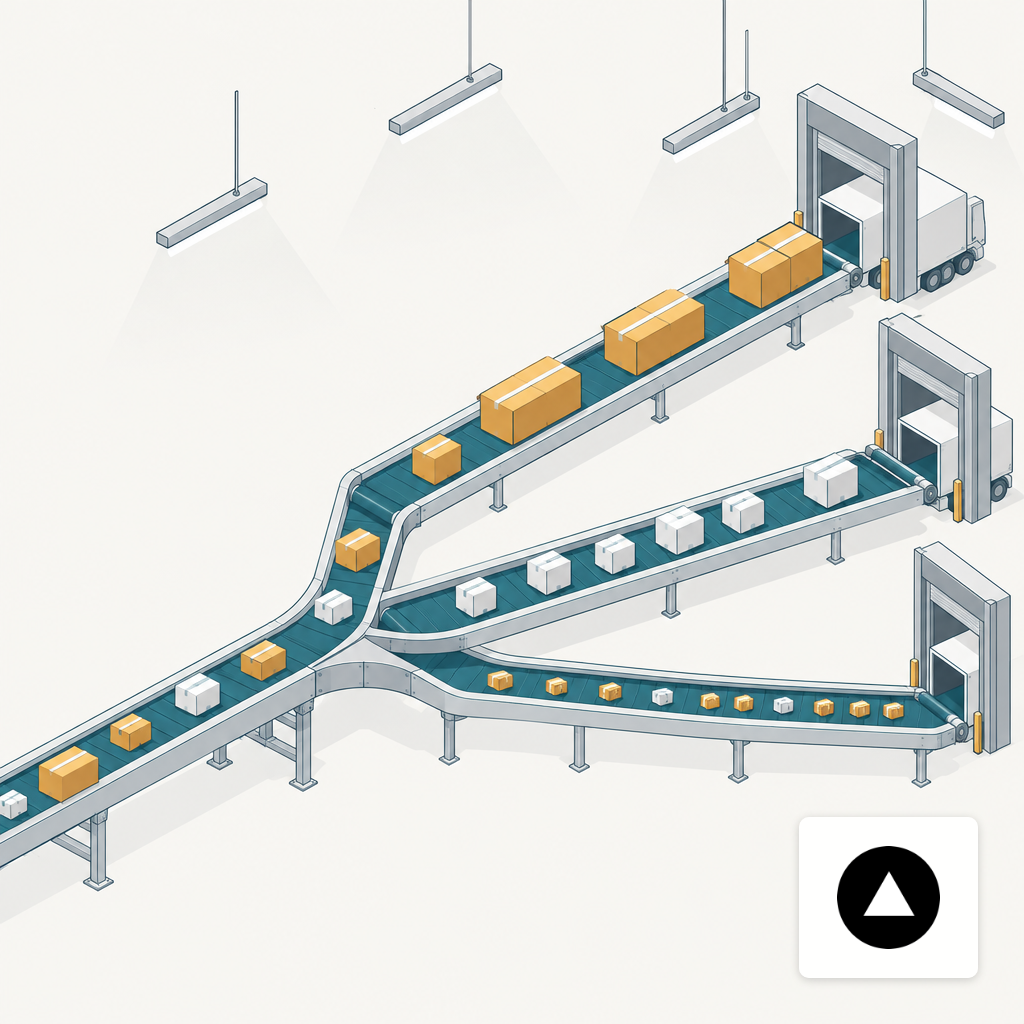
When Routing Stops Paying Off
Routing has a cost. Every added provider is a key to rotate, a rate limit to track, an error class to catch, and a quality eval to maintain. Industry data suggests the complexity is worth it at a certain scale: in 2026, 37% of enterprises run five or more LLMs in production, moving toward portfolios tuned to use case rather than single-vendor stacks. But five models is not a goal, it is an outcome.
The threshold at which routing stops paying off is set by three things: the spread between the cheapest and most expensive model on a given task, the quality gap on that task, and the operational overhead of carrying the extra provider. The first is a spreadsheet exercise. The second is a benchmark exercise. The third is where most of the lost savings hide.
On SWE-bench Verified in the April 2026 run, Claude Opus 4.6 scored 74.0%, GPT-5.4 scored 74.9%, and Gemini 3.1 Pro scored 68.3%. Four models landed within seven percentage points. On tasks where the quality spread is that tight, routing by cost is rational. On tasks where one model is clearly better by 15 points or more, routing to the cheaper option is a loss disguised as a saving.
The Numbers Routers Actually Hit in Production
The theoretical ceiling for routing savings is the gap between the most expensive model you would otherwise use and the weighted average of what the router actually calls. The production numbers are considerably more modest. Ramp Router, one of the largest deployments publicly disclosed, processes more than 2.75 trillion tokens monthly with roughly 30% cost savings and about 30ms of added latency. Thirty percent is the realistic planning number, not the 60–80% that early routing papers suggested.
Router choice also matters more than router presence. On the RouterArena benchmark, commercial routers did not necessarily beat open-source alternatives, with GPT-5 ranking seventh due to its restricted model pool and NotDiamond ranking twelfth for frequently picking expensive models. The lesson is that a router optimizing for the wrong objective can cost more than no routing at all.
OpenRouter's Auto Router takes a different approach, classifying prompts into roughly 30 task types and routing to the model developers most rely on for that task, with no fee beyond the routed model's rate. For teams without the capacity to run their own eval harness, that heuristic is a reasonable floor.
A Default Allocation Worth Starting From
With those cost and quality shapes established, a defensible starting configuration for a research runner looks like this:
- Extraction: GPT-5 as primary, Gemini 2.5 Pro as failover. Reserve Claude for pages that fail schema validation twice.
- Synthesis: Claude Sonnet 4.5 for analyst-facing output, GPT-5 for agent-to-agent intermediate synthesis where the reader is another model.
- Citation check: Claude Sonnet 4.5 with aggressive prompt caching on the rubric. The cache read rate at $0.30 per million makes it the cheapest option on this step at scale, not the most expensive.
- SEC parsing: GPT-5 for filings over 200K tokens to avoid Gemini's long-context cliff. Gemini 2.5 Pro for shorter 10-Qs and 8-Ks where the whole document fits under 200K and the price matches.
This is a starting default, not a final answer. The configuration that actually ships should come out of a shadow-eval week where every step runs against all three providers on a sample of real tasks, with the output graded against a rubric the team actually trusts. The point of building or buying a multi-agent runner is to make that re-evaluation cheap enough to re-run quarterly as prices and models shift.
What To Audit Before You Sign
Prices move. GPT-5 is listed as deprecated on several comparison trackers with a shutdown window in late 2026, Claude Sonnet's introductory rate is scheduled to step up to $3/$15, and Gemini's long-context thresholds have changed twice this year. Any allocation that is correct today will drift inside two quarters. The configuration deserves a quarterly re-run, not a one-time setup.
Three things to confirm before locking a routing config:
- Whether the vendor's quoted cache rate applies to your prompt shape. Claude's $0.30 cache read assumes the cached prefix exceeds a minimum length and is reused within a time window.
- Whether Gemini's 200K threshold is measured on input tokens only or on input plus thinking tokens. The practical answer determines which filings route to GPT-5 instead.
- Whether the router's own classifier counts toward the token bill. OpenRouter does not add a fee; some others do.
The spreadsheet math is the easy part. The harder part is picking a reference workload the team keeps replaying every quarter, so that when a new model lands or a price card shifts, the re-allocation takes an afternoon rather than a project. That is the operational discipline that turns multi-provider routing from a line item on the architecture diagram into a durable 20–30% saving. The vendor questions worth asking before signing are the same questions worth asking the configuration every quarter after.

Written by
Eric LamannaEric Lamanna is VP of Business Development at Search.co, where he drives growth through enterprise partnerships, AI-driven solutions, and data-focused strategies. With a background in digital product management and leadership across technology and business development, Eric brings deep expertise in AI, automation, and cybersecurity. He excels at aligning technical innovation with market opportunities, building strategic partnerships, and scaling digital solutions to accelerate organizational growth.