


Most cost comparisons between OpenAI, Anthropic, Gemini, and DeepSeek stop at the per-token sticker price. That is the wrong place to stop. A multi-agent research pipeline running 24/7 does not consume tokens uniformly; it fans out to cheap workers for extraction and classification, and hands the hard 10% to a frontier model for synthesis. Whether you route that traffic through a single vendor plan or bring your own keys across four providers changes the monthly bill by a factor of three or more, and it changes what happens when a model gets deprecated on you.
This piece prices a concrete workload, then names the operational costs the sticker never mentions.
So which routing model actually costs less once the hidden line items land?
The Sticker Price Gap Is Not a Rounding Error
Per-token pricing across major providers is genuinely heterogeneous. Stanford's FrugalGPT team showed that fees between popular providers differ by up to two orders of magnitude, and the gap has widened, not closed, as new tiers appear. On one end, frontier models like Claude Opus 4.6 sit at $15 per million input tokens and $75 per million output. On the other, hosted open-source models such as Llama 4 Scout start near $0.10 per million input. That is a 150x spread on input alone.
The picture inside a single provider's catalog is nearly as wide. A router-tier model like GPT-5 Nano lists around $0.05 per million input, while GPT-5.6 Sol sits at $5 in and $30 out on some current pricing pages. Between the two you find DeepSeek V4-Flash at $0.14 input on a cache miss and $0.0028 on a cache hit, and Claude Sonnet 5 at $2 in and $10 out. The relevant number is not any one price. It is your blended rate once traffic is split across tiers.
Two years of price compression makes the split matter more, not less. GPT-4-class performance that cost $30 per million input tokens in early 2024 now runs $2 to $3, which means the ceiling has dropped faster than the floor. A workload that used to be dominated by flagship spend can now be dominated by orchestration overhead if you are not careful.
A Worked Example: 500M Tokens a Month, Multi-Agent Research
Consider a mid-sized market intelligence team running a nightly pipeline against SEC filings, competitor sites, and product review corpora. Total monthly consumption: 500 million tokens, split roughly 80% input and 20% output. Workload decomposition after instrumenting agents:
- Router / classifier (35% of calls, ~10M tokens): intent detection, source triage, dedup. A cheap model handles this cleanly.
- Extraction and enrichment (50% of calls, ~350M tokens): pulling structured fields from HTML, summarizing long documents, tagging entities. A workhorse tier.
- Synthesis and cross-document reasoning (15% of calls, ~140M tokens): the memo the analyst actually reads. Frontier only.
Route everything to a single frontier model at roughly $3 input / $15 output per million and the bill lands near $18,000/month (400M input at $3 = $1,200; 100M output at $15 = $1,500 — plus the multiplier that shows up because you were running Opus-class calls on classifier-tier prompts, which typically inflates output tokens 3-5x through unnecessary reasoning traces).
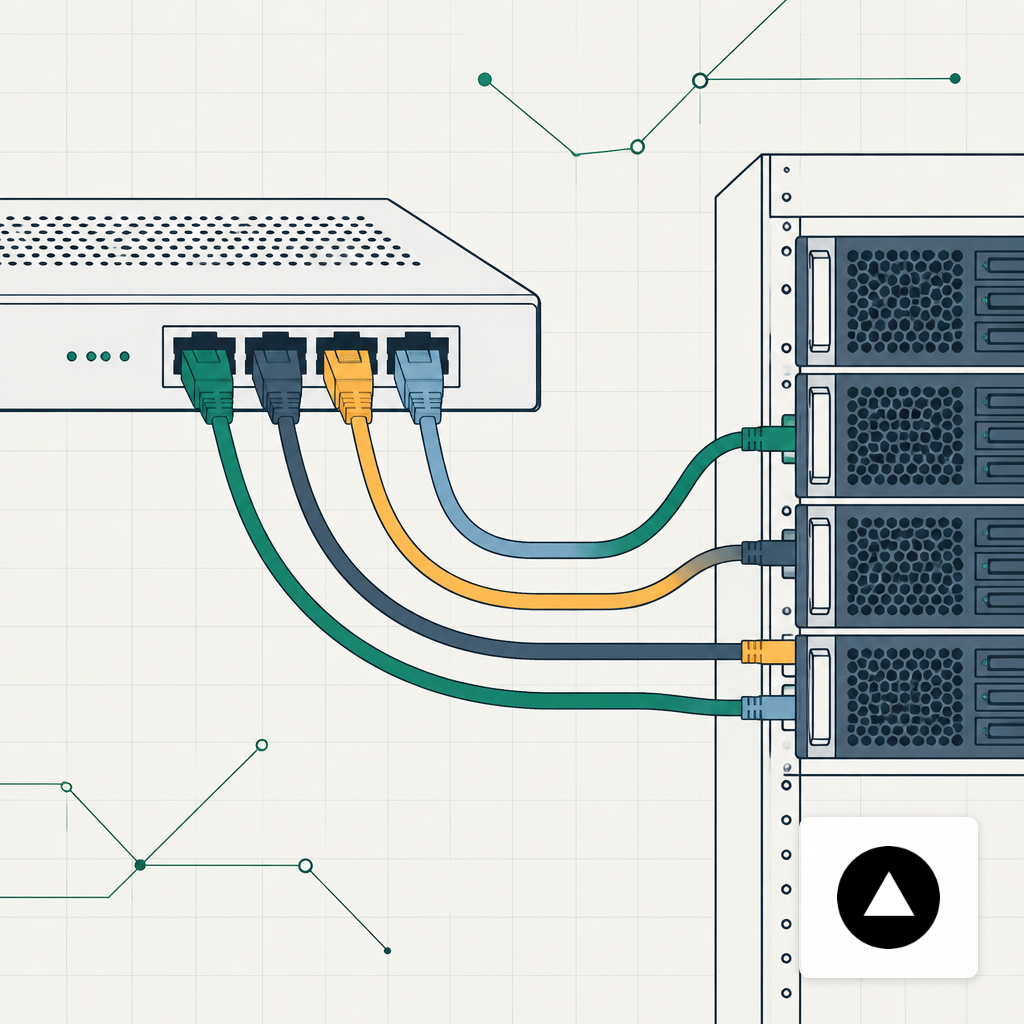
Now split the workload across providers via BYOK:
- Router at GPT-5 Nano or DeepSeek V4-Flash: ~10M tokens at $0.10 blended = $1.
- Extraction at Gemini 3.5 Flash or DeepSeek V4: ~350M tokens at ~$0.40 blended = $140.
- Synthesis at Claude Sonnet 5 or GPT-5.6 Terra: ~140M tokens (say 100M in / 40M out) at $2/$10 = $600.
Total inference: roughly $740/month. That is a 24x reduction on the model line alone. The pattern is not a fluke. RouteLLM published results showing 85% cost reduction on MT Bench while maintaining 95% of GPT-4 performance by routing only 14% of queries to the strong model. FrugalGPT went further, reporting that a cascade approach can match GPT-4 with up to 98% cost reduction, or improve accuracy by 4% at the same cost. Even conservative managed routers land in the same neighborhood: Amazon Bedrock's Intelligent Prompt Routing claims up to 30% cost reduction without compromising accuracy.
The Hidden Costs Nobody Prices In
The $740 figure is not the real bill. Multi-provider BYOK ships with operational tax that a single-vendor plan absorbs for you. Price the following honestly before deciding.
Key Management and Secrets Rotation
Four providers means four sets of API keys per environment, per region. If your pipeline is versioned to Git and deployed across dev, staging, and prod, that is a dozen secrets minimum, each with its own rotation cadence. Budget engineering time for a secrets manager integration and audit trail. This is one reason our own BYOK layer treats keys as first-class objects with per-provider policy rather than environment variables.
Rate Limits and Fallback Logic
Single-vendor plans give you one quota to manage. Four vendors give you four, each with different burst behavior, different 429 semantics, and different tier-graduation rules. You need queue-aware routing, circuit breakers on each provider, and a documented fallback matrix so a Gemini incident does not silently reroute your extraction traffic to a $15/M model. Gateway platforms exist for exactly this — the OpenRouter vs LiteLLM tradeoff is whether you pay 5.5% for managed fallback or run it yourself.
Egress and Aggregator Fees
Going direct is not free either. OpenRouter, the most common aggregator, passes token prices through but charges 5.5% on credit purchases and, for BYOK, is free through 1 million BYOK requests per month, then 5% on excess. On the sample workload that is around $37/month if you stay under the threshold, or several hundred at scale. Vercel AI Gateway and direct provider billing avoid that line but add their own integration cost.
Observability and Attribution
You cannot optimize what you cannot see. A single-vendor dashboard tells you spend by day. A multi-provider pipeline needs cost attribution by agent, by document, by pipeline stage — otherwise you learn about a $6,000 overrun at the end of the month. Plan on a token-accounting layer that tags every call with pipeline metadata and writes to a warehouse you actually query. The same principles that apply to reducing bandwidth costs in high-volume scraping apply here: measurement precedes savings.
Deprecation Risk
Vendor lock-in is not abstract. OpenAI's deprecation policy commits to at least 6 months' notice for generally available models and at least 3 months for specialized variants. That sounds generous until a specific migration hits. On August 26, 2025, OpenAI notified developers that the Assistants API would be removed one year later, forcing migration to the Responses API. A single-vendor plan concentrates that risk. Multi-provider routing distributes it: when one vendor deprecates a model, your extraction tier keeps running on the other three while you migrate.
When Single-Vendor Actually Wins
BYOK routing is not always the right answer. Three cases where a single-vendor plan or direct-only integration pays back:
- One model dominates your workload. If 80%+ of calls go to one family and the rest is negligible, the engineering cost of a router exceeds the savings. This is what makes Anthropic-heavy shops keep a direct Anthropic contract rather than pay aggregator fees.
- Compliance or data-residency requirements pin you to one provider. Some enterprise SKUs include HIPAA BAAs, regional data processing, or zero-retention clauses that BYOK-through-a-gateway complicates.
- Team size below the operational threshold. A two-engineer team spending under $2,000/month will lose more in ops time than they gain in per-token savings. Small workloads should optimize for one bill, not the cheapest tokens.
The break-even in practice sits somewhere between $3,000 and $8,000 of monthly model spend, depending on how much of your pipeline already speaks a shared inference interface. Below that, pay the vendor fee. Above it, the math favors routing, and the math gets more favorable each quarter as prices compress further.
| Scenario | Best fit | Break-even signal | Main risk |
|---|---|---|---|
| Under $2K/mo model spend | Single vendor, direct | Ops time exceeds savings | Overengineering |
| $2K–$8K, mixed workload | Aggregator + BYOK | Fee < engineering cost | Fallback misconfig |
| $8K+, multi-stage pipeline | Self-hosted router, BYOK | Routing saves >30% | Observability gaps |
| One model = 80%+ of calls | Direct provider contract | Enterprise discount available | Deprecation exposure |
| Compliance-pinned | Single vendor, enterprise SKU | BAA / residency required | Higher unit cost |
How to Actually Ship This
The order of operations matters. Teams that jump straight to a router before instrumenting spend usually end up with a more expensive pipeline, not a cheaper one, because they route on assumptions instead of measurements.
- Instrument first. Tag every LLM call with pipeline stage, agent name, document ID, and token counts. Two weeks of logs beats any pricing spreadsheet.
- Segment the workload. Group calls by required capability, not by which model you happen to be using today. Router / extraction / synthesis is a fine starting taxonomy.
- Benchmark on your data. Public benchmarks tell you nothing about your extraction accuracy on Korean patent filings. Run a labeled eval set through three candidate models per tier before switching. The benchmarking approach for ingestion pipelines we use internally applies directly.
- Route by policy, not by preference. Cost ceilings, latency SLOs, and quality thresholds are code, not tribal knowledge. Version them.
- Version outputs, not just prompts. When you swap a model, you need a diff against the previous version's outputs. Git-backed pipelines make this cheap.
Teams building this stack from scratch often underestimate the last step. It is what makes a routed pipeline reproducible six months later when a model changes underneath you, and it is why the same discipline that governs a corporate intelligence RAG pipeline should govern the routing layer above it.
What the Bill Looks Like in Practice
For the 500M-token workload above, a realistic annualized picture: single-vendor frontier routing lands near $216,000/year with roughly $8,000 of engineering time saved on integration. Multi-provider BYOK lands near $9,000/year in inference plus roughly $30,000 to $50,000 in operational overhead — key management, observability, fallback code, and the ongoing eval loop that keeps you honest. Net difference: still north of $150,000, and the delta compounds as volume grows.
The interesting question is not whether routing saves money. On any workload above the operational threshold, it does. The question is whether your team is set up to earn the savings without introducing fragility that costs more than the tokens ever would. That is an infrastructure question, and it is the reason pipeline discipline matters more than the model choice itself.
That same discipline carries over once the tokens are spent on retrieval, not just generation — see how enterprise search is evolving in the age of LLMs as routing and retrieval budgets converge.

Written by
Timothy CarterTimothy Carter is the Chief Revenue Officer at SEARCH.co , where he leads global sales, client strategy, and revenue growth initiatives across a portfolio of digital marketing and software development companies. With over 20 years of experience in enterprise SEO, content marketing, and demand generation, Timothy helps clients—from startups to Fortune 1000 brands—scale their digital presence and revenue. Prior to his current role, Timothy led strategic growth and partnerships at several high-growth agencies and tech firms. Tim resides with his family in Orlando, Florida.